
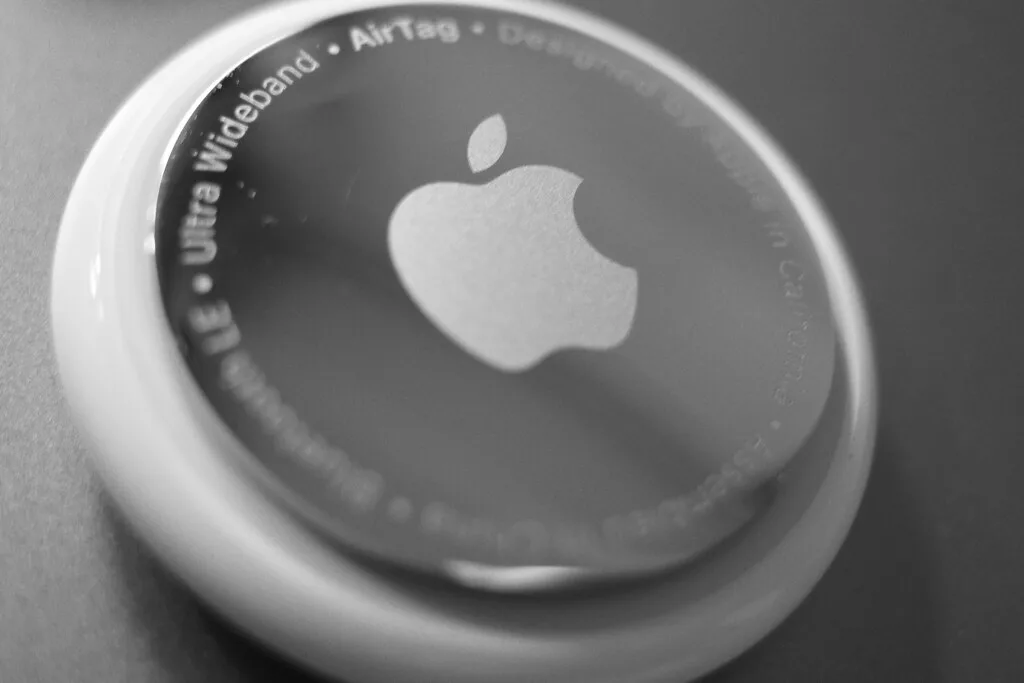
With the release of the second generation of Apple AirTag it got me thinking about how we use them and how they’re built.
As an example, here’s a screenshot of wallets that have an AirTag pocket on the front of them. What do you notice about the AirTags?

They all show the metal side facing out. The reverse side, white plastic, is the part that you can have engraved.
Is there a “right way round” or does it not matter?
I did some research into this – a tear down from iFixit and some reverse engineering notes
Technically, an Apple AirTag is omnidirectional, meaning it broadcasts its signal in all directions. However, because of the materials used in its construction, there is, I believe, a slight “best” way to orient it.
- The “Front” (White Plastic Side): This side is the most “radio-transparent.” Bluetooth and Ultra-Wideband signals pass through plastic much more easily than metal. Additionally, the AirTag’s speaker and NFC antenna are located behind this plastic face.
- The “Back” (Stainless Steel Side): The metal battery cover and the CR2032 battery itself can act as a slight shield. While the signal still wraps around the device, the metal side is technically more “opaque” to radio waves.
So, if you’re fitting an AirTag into something with a fixed position (rather than a dangling keyring), I’d recommend placing it “white side out” as this ensures the path of least resistance for the signal to reach a passing iPhone.
 Share this post on social media.
Leave a Reply